
Middletown Previous Residents by Era
The search for previous residents starts with an era, not a broad name search. Deeds are strongest for the recorded ownership trail. City directories provide dated address listings. Census schedules place household evidence at ten-year intervals. Sanborn maps date the building, street layout, and use rather than a person. Permit and application records can help date a change when publicly released. This mix is especially useful in Middletown because Warren and Butler have different online land-record depth, while MidPointe maintains a local directory collection with stated gaps.
| Source | Years it covers | Where held | What it shows |
|---|---|---|---|
| Warren Recorder deeds | Indexed online through 1797 | Warren Recorder and AVA | Recorded ownership and document trail for Warren-side parcels. |
| Butler Recorder Official Record Search | Current portal certified through August 27, 2026; historical start not published | Butler Recorder | Party, document, and OCR trail; earlier coverage needs office confirmation. |
| MidPointe City Directory Collection | 1891 to 2000, with named gaps; 2001 onward not digitized | MidPointe Digital Archives | Listed address, person, business, use, and street context for an edition. |
| Williams sample microfilm run | 1917 to 1918, 1924 to 1925, and 1926 to 1927 verified | MidPointe Local History and Genealogy Collection | Street and householder material in a detailed directory structure. |
| Federal census | 1790 to 1950 publicly released as of 2026 | National Archives and approved access points | Household evidence at a ten-year interval. |
| Middletown Sanborn maps | 1885, 1890, 1895, 1901, 1907, and 1924 | Library of Congress online | Building, street, and land-use context without a resident list. |
| Butler Accela applications | Online start not stated | Butler Citizen Portal or records custodian | Public application or permit timing, subject to field visibility. |
| Ohio historic death index | 1913 to 1944 and 1954 to 1970 | Ohio History Connection | Historic death-index cross-check, not an address source. |
Start with a current parcel when the goal is a deed chain. Start with a directory volume when a date or old address form is already known. Use maps and census material to test a change between those dated sources rather than treating one record as the whole history.
Note: Record the source year, image or page, address format, and legal description as each earlier result is added.
Middletown Previous Residents Need a County Check
Previous-resident research must begin by placing the parcel in Butler or Warren County. A Middletown postal label, city boundary, or delivery ZIP does not select the Recorder. The right Auditor property search gives the parcel number, property address, legal description, and current owner. In Butler, the relevant routes are owner, address, parcel, advanced, map, and sales searches. In Warren, use name, address, parcel ID, account number, subdivision or lot, or advanced search. The parcel and legal description become the stable link if street formatting changes over time.
For a Butler-side parcel, use the Butler County Auditor Property Search. For the Warren segment, use the Warren County Property Search. Both are public starting points, but an owner field is ownership evidence, not proof of everyone who may have been at that address.
Middletown Code allows newly annexed areas to be renumbered when inconsistent with the city block grid and allows duplicate street names to change. No citywide old-to-new address table was verified. When a number seems to change, compare the legal description, lot or subdivision, cross streets, and map sheet instead of assuming a modern number is unchanged.
Past Residents Across Two Recorder Systems
Warren County has the clearer online historic statement: its Recorder says all deeds are available and indexed online through 1797, and most documents have been online since April 20, 2016. The Recorder recommends taking the 10-digit parcel number from the Auditor into AVA. Butler offers a free quick and advanced document index, index-only and full-text OCR choices, plus historical-book and index links, but the inspected portal does not state a comparable earliest online year. That difference changes the fallback plan for a Middletown address.
Use Warren Recorder's AVA search instructions after confirming a Warren parcel. A Butler no-hit is not proof that the earlier record is gone. The Butler Recorder directs historic-research requests to recorder@bcohio.gov and states a five-record-per-day emailed-copy procedure before its per-page charge. Give the office a book/page, instrument number, party range, parcel, or legal-description clue whenever possible.
The Warren County Records Center & Archives guide is the additional historic route for Warren-side research.
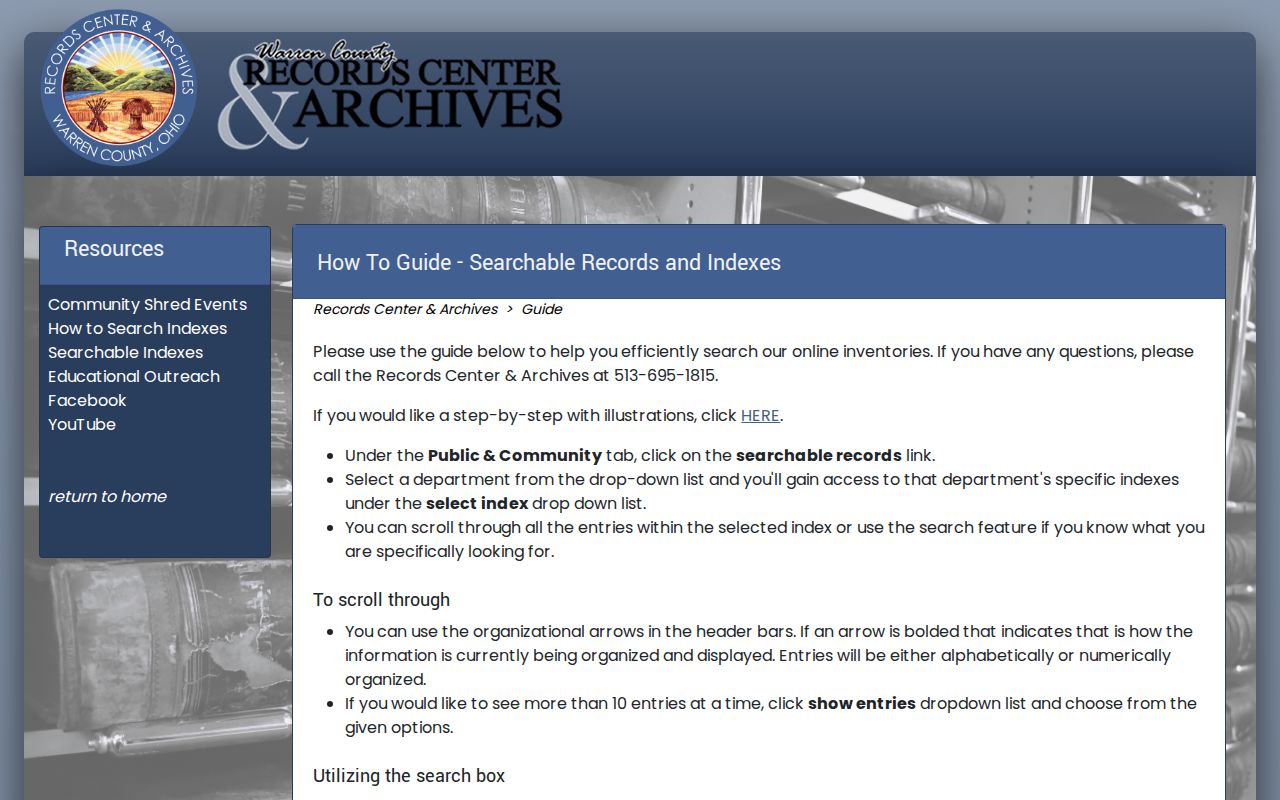
The Records Center route lets a user choose a department and index, browse or filter entries, and open a scan where a view-document link is supplied.
Trace Previous Residents Through Deeds
A deed chain follows the parcel backward, not just the street text. Begin with the current owner and legal description from the appropriate Auditor. Find the transfer that brought that owner into the parcel. The buyer is the grantee on that document, while the seller is the grantor. To locate the earlier transfer, search that seller as a prior grantee while checking that the same parcel, subdivision, lot, or legal description remains in view. A missing expected transfer can signal probate, a sheriff's deed, a corporate transfer, a quitclaim, a partition, a land contract, or an event not shown in the first search.
- Save the current parcel identifier, site address, legal description, and present owner from the county Auditor.
- Find the current owner's acquisition in the Recorder index and preserve its recorded date, document number or book/page, grantor, grantee, and legal wording.
- Search the seller from that transfer as a prior grantee, using the parcel or legal description to separate the right acquisition from other records.
- Repeat the transfer-to-transfer check backward and keep a chronological log of document type, date, parties, parcel, address format, and source.
- When the online trail thins, move to the Recorder counter, historic books, an emailed copy request, or the Warren Records Center rather than forcing an uncertain match.
- Grantor
- The party transferring an interest in a recorded document, commonly the seller in a deed.
- Grantee
- The party receiving an interest in the recorded document, commonly the buyer in a deed.
- Chain of title
- A dated sequence of recorded transfers tied to the same parcel or legal description.
- Legal description
- The lot, subdivision, block, metes-and-bounds, or other land wording that links records even when street formats differ.
Note: A deed proves a recorded land transaction, not continuous presence at the address between recording dates.
Middletown Previous Residents in Directories
Directories fill the years between land transfers by showing a listing tied to an address in a particular edition. MidPointe's collection covers Middletown directories from 1891 through 2000, but it names missing years and warns that full-text OCR can be inaccurate. The Street and Avenue Guide runs by number and may contain a person, business, room, vacancy, or other use. An alphabetic directory entry answers a different question from the street guide. Read the scanned image and record the page before treating a spelling or number as exact.
- Find the closest available directory year for the historic address and search both the street guide and alphabetical material when useful.
- Write down the edition, page or image, street number, cross street, listing text, and any uncertainty in the original address form.
- Check the next available directory volume on each side of the date, allowing for the collection's stated gaps.
- Pair the directory years around an available federal census with the census household evidence, then test changes against a deed, obituary, or map.
- Keep an address change as a question until the parcel, legal wording, or cross-street context supports it.
The historic collection is described in depth on the Middletown city directories page. For an in-person fallback, MidPointe's Middletown branch at 125 South Broad Street keeps a Local History and Genealogy Collection; the library's official locations page publishes current hours and contact details. The Historical Society is another focused research-contact route, but no item-level online catalog or fee schedule was verified.
Note: A directory listing documents its edition's canvass period and should not be read as a permanent address claim.
Sanborn Context for Middletown Past Residents
Sanborn maps help test whether a historic address was on the same block, what stood there, and how the street was configured. The Library of Congress has verified Middletown editions for 1885, 1890, 1895, 1901, 1907, and 1924. The 1924 atlas has 39 sheets and names North Excello, South Excello, and West Middletown. Those locality labels can be useful clues when an old directory uses a setting that looks unlike a current map. A map can date a building footprint or use. It does not identify an occupant.
Middletown's Pioneer Cemetery record page is another documented historic route when a trail reaches a death or burial question.
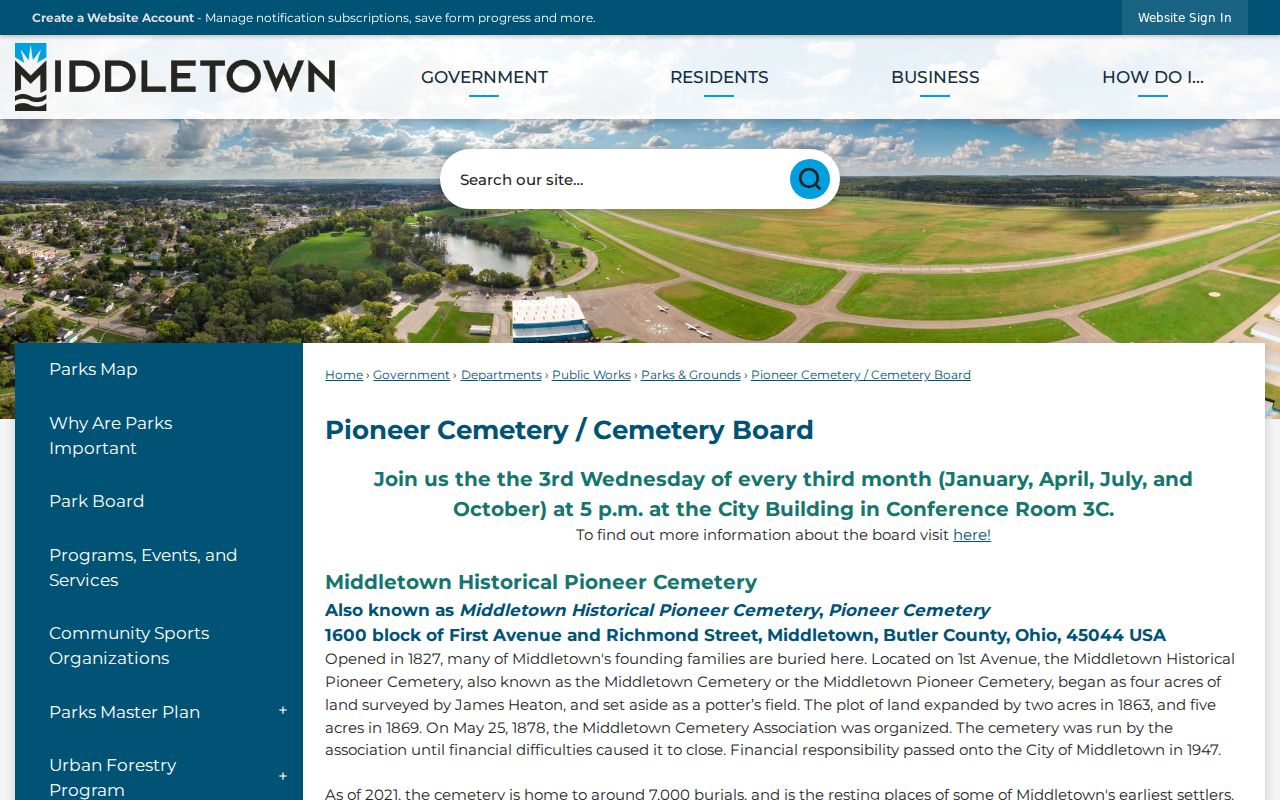
The City says Public Works Engineering maintains cemetery records, while some graves were relocated and Woodside records may be more accurate for people moved there. No official online interment search was located.
The Library of Congress record for the 1924 Sanborn atlas provides the map-access route. Pair its street and building evidence with a directory image and the parcel's legal description before drawing a continuity conclusion.
Middletown Past Residents at Trail Endpoints
A name disappearing from a directory is a lead for more dated research, not a final answer. Ohio History Connection's free historic death index covers Ohio Department of Health death certificates for 1913 to 1944 and 1954 to 1970. Its broader historical holdings describe additional county-ledger and state-archive material. A death-index result can support an event and a date range, then a probate or Recorder record can help determine the related parcel trail. Marriage records belong with the Probate Court in the county that issued the license, not the Middletown Health Department.
Ohio History Connection's historic death-index search is the official statewide historical source shown below.
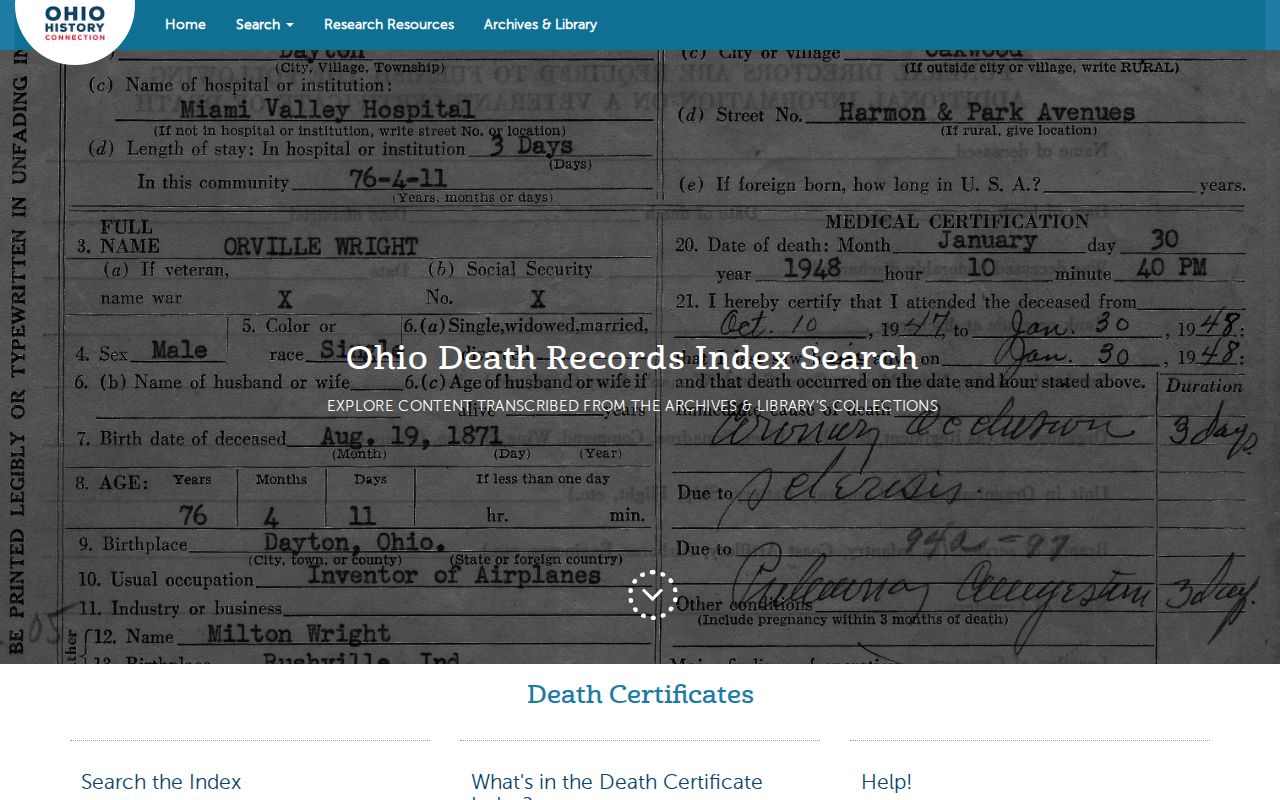
Use an indexed death as a cross-check with a dated address trail, not as evidence that a person was at one particular Middletown property.
Middletown Previous Residents Fallbacks
Insider tip: an online no-hit is a cue to change access channels. Butler's Recorder has a documented historic email-copy path. Warren's Records Center has an index and reading-room route. MidPointe combines a searchable digital archive with physical Local History material. For a City-held record, make a narrow request for an existing item rather than asking staff to build an address history. Include the address or parcel, date range, department or record type, and whether inspection, email, or a copy will work.
Middletown's official public-records request portal is the City route for an existing department record.
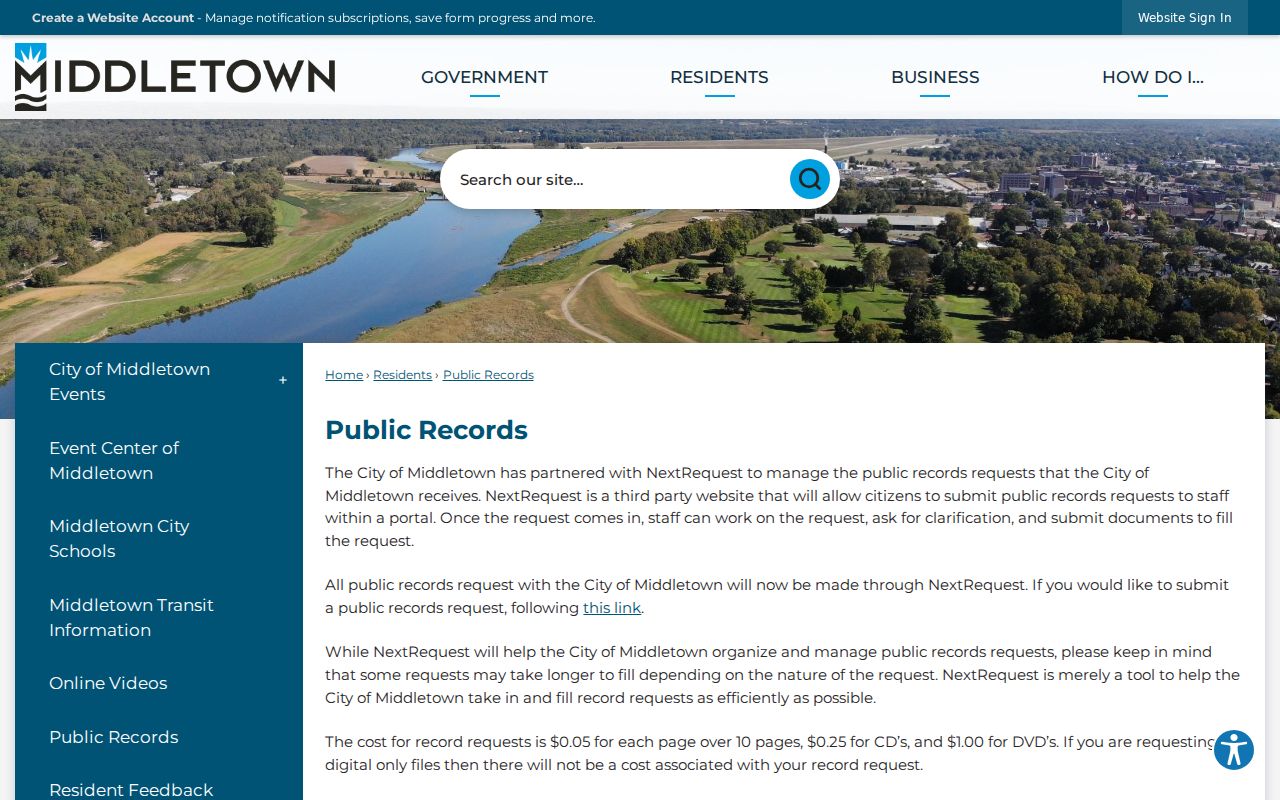
The City states that digital-only records are free and that a requester may choose inspection, pickup, mail, or email for responsive records. The City does not need to create a new compilation or perform historical research.
Ohio's Public Records Act, ORC §149.43, provides for prompt inspection and copies within a reasonable period, with actual copy or delivery costs where applicable. It also keeps statutory exceptions in place.
Privacy in Middletown Previous Residents Research
Previous-resident research is most reliable when it stays tied to a historical address, date, and custodian. Protected addresses, sealed court material, confidential voter records, restricted motor-vehicle personal information, and records subject to other privacy rules do not become available because an older address is of interest. Ohio Safe at Home participants have a statutory confidentiality route. Never combine sources to reconstruct a protected location or treat a gap as a license to infer private facts.
Lawful use. Use Middletown previous-resident records for house history, family history, estate or heir questions, and personal research. Do not use information to stalk, harass, intimidate, or track a living person.
Verify a deed, directory page, map, or request response with its custodian before relying on it. The evidence level matters: land records follow transactions, directories capture listings in a printed edition, and maps provide property context.
Note: A careful historical trail leaves uncertainty visible instead of converting a dated record into a claim about the present.